Search This Blog

Tuesday, August 9, 2011

Finished Shooting


We have left Dharamsala and therefore shooting is completed. There are definitely other things I wish I could have filmed, mostly B-roll type footage and a few more interviews with people other than my central characters. However, given infinite time I would probably never feel finished or completely satisfied with my footage. Such is the case with documentary filmmaking; there’s always something more you wish you had.

On the other hand, if there’s no schedule and no limit, you’ll never finish your film. And in reality, I have been very fortunate, even very blessed for what I have been able to get. When I first started this project I thought three months time should be plenty to get a story with a beginning middle and end. But pretty soon I realized that real-life stories can take a long time to play out. As the end of our stay got closer and closer I was really starting to worry whether I’d have any type of ending to my story, or at least some kind of accomplishment or something that would work as and ending.

Q&A with Tibetan Monks


A few weeks after arriving in McLeod Ganj, we discovered an English conversation class for Tibetan monks which needed volunteers. We were eager to help out, and have continued to do so throughout the majority of our time here. I will probably be writing more about the entire experience later, but through this volunteering we got to know the English teacher, a woman named Margaret from Australia, very well, and one day she invited our group to come and have a question and answer session with a couple monks from a higher class she was teaching. We were more than happy to participate. I already had several questions about Buddhism and I was just waiting for the opportunity to ask them.

The following are some of our questions and some of the monk’s answers. They are not word for word, but an account of what was said based on my notes.
Q: = question, A: = answer, and then I’ll add a “C:” to some of them for my own comments.


Q: What does “Ohm mani pedme hum” mean?
(this is a mantra, a very special phrase written around the Kora, in the temple, in prayer wheels, as well as repeated out loud in song or in chant)

Tuesday, August 2, 2011

Leaving So Soon

It's raining and the appointment I had canceled, otherwise I probably wouldn't be writing this right now. We only have three days left in Dharamsala, and therefore I am cramming to wrap up my filming.

Don't worry. I am glad to report that I am very close to having everything I need, and that I should be able to reasonably get all that I need over these next couple days. Maybe not everything I wanted to get... but I think that's a fairly impossible expectation when it comes to documentary film.

Lately however, things have been turning out surprisingly in the favor of my film. Just this week Tong Len's kids moved into their new hostel and I got to be there to film it. Also, the day before we are leaving, a couple I filmed when we first got here will be receiving their marriage certificate with help from my lawyer friend, and they have invited me to come along. And in addition to these things, I have been getting some really great answers in the interviews I've been conducting lately.

I go through weird cycles of being really excited for this film, then suddenly wanting to give up and then getting really excited again. Right now I am excited. I'm sure in editing I will get discouraged a few more times, but I promise I won't give up. I myself can't wait to see the finished film.

Thursday, July 28, 2011

Cultural Proof: Teachings from His Holiness The Dalai Lama


            While staying in McLeod, we had the opportunity to hear His Holiness The Dalai Lama give teachings at the Tibetan temple. It may be assumed that this would be a frequent occurrence since the temple stands directly in front of His Holiness’ home. However, he is a very busy man, frequently traveling to talk all over the world. In fact it seems somewhat ironic that in the time we’ve been here, he has given more teachings in the United States than in the next-door temple.
            So this was a big deal. Before we could even go to the teachings, we first had to get a pass that would allow us to enter the temple grounds on the big day. And not just us foreigners; everyone had to have a pass. So the day before the teachings we found ourselves in a very long line of Tibetans and foreigners, waiting to get our passes. The wait was long, but we finally got them. We also had to buy a small AM/FM radio, as the teachings were to be given in Tibetan and translated over radio broadcast into English.
            There were, I believe, three different sessions of teachings over two days. The first day had a morning and afternoon session. Because the morning session was very early and people were getting there even earlier to get a spot, we decided to wait until the morning session got out. Then when everybody was leaving to get lunch, we’d swoop in and grab a spot and wait until the afternoon session started.
            We managed to get pretty good spots too: upstairs, just outside the temple and to the right. We weaved through the crowd and found a nice vacant area next to a pillar. There are no chairs, so we brought cushions to sit on, and the pillar provided back support. We were at an angle that we couldn’t see His Holiness directly, but there was a nice, flat screen monitor set up fairly close with live video of what was happening.
            Thus far, everything resembled very much my own faith’s general conference meetings. So I expected it to continue as such. I was ready to get some good, inspired insight on life that would help me make myself a better person… and maybe I did. I’m still trying to make sense of it.
            We tuned our radio to the English translation channel as His Holiness began to speak. After a while, he stopped, and the translation began. The teaching was on “emptiness”.
            I listened to the teaching, doing my best to understand and even took notes. I’m not sure if I understood everything (in fact I’m sure I didn't), and my notes may not even be correct, but this is what I took from it:

Sunday, July 24, 2011

Sketches

Before coming to India, Julia got me a great little moleskine notebook that fits right in my pocket. I promised myself with this new handy-dandy book that I would do a lot more drawing, something I've always loved to do, but haven't done enough.

So since we've been in India I've taken several opportunities to sketch the people and places around me (and some dinosaurs). The following are those sketches. I'll try to provide brief descriptions of each. Enjoy!

Our first day in India. This was a man sitting outside the airport.

Saturday, July 23, 2011

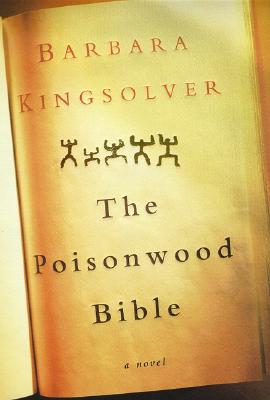
The Poisonwood Bible


This novel, written by Barbara Kingsolver, is about a Baptist preacher and his family who go to live in the Congo, where the father hopes to convert the Congolese to Christianity. The story is told from the perspectives of the wife and their four daughters and recounts their experiences and difficulties living among a people that are so different from themselves.

“If somebody was hungry, why would they have a big fat belly? I don’t know.”
- Ruth May Price (Preacher’s youngest daughter)

This book should probably be required reading for travelers (especially first-time travelers), as it has the power to help its readers become more sensitive to cultural and religious differences.

Although I have never been to Congo or anywhere else in Africa, my own experiences traveling to Mexico and India have been similar in many ways. First there is a period of bewilderment and endless questions, “What is that? What are those for? Where is that sound coming from? What’s wrong with that person?” As you begin to answer those simple questions (“That’s a prayer wheel. Those are for eating.  That’s the music the gas truck plays. That person has elephantitis.”) then you can start looking a little deeper to see the why behind everything, “Why do they do that? Why does this happen? Why do they believe this?” etc.

Monday, July 18, 2011

Thoughts


Over the last week I’ve edited and re-edited the script to my film trying to get it to the right place. But I’m having a hard time looking past the basic events and interviews and really seeing the story and the theme. So I decided to back things up, ask myself some questions and see if that could guide my thoughts any better. This blog post is not eloquently written or originally meant for an audience. It’s just me trying to get my thoughts out. But it’s all part of the filmmaking process, and so I figured, why not share it? I actually recommend it to anyone who is having trouble organizing their thoughts. Just sit down and write it out. It really helps.

Here are the questions I asked myself:
What first drew my attention to the idea of my film?
What is the theme of this film?
What do I hope to accomplish with this film?
What is the story?

Here are my answers: